
Wellbeing and sport are no longer niche interests in European travel but increasingly shape how travellers define a good holiday. According to the second part of the DERTOUR Group European Travel Trend Report, this is now clearly reflected in how travel decisions are made across Europe. At the same time, interest in sport remains strong, although its meaning is changing, with travellers valuing movement that supports balance and a sense of restoration rather than performance or intensity, which helps explain why flexible, multi‑activity formats and the integration of movement into holiday rhythms are what make sport particularly appealing today.
The report is based on a survey among 8,000 respondents across 13 European countries, conducted in early February 2026, and is complemented by insights from DERTOUR Group’s specialist businesses and customer data from 16 markets.
Wellbeing sets the frame for travel choices
Across all 13 European markets surveyed, wellbeing emerges as the dominant reference point shaping travel decisions. More than half of travellers (52.5%) say they would rather choose a health-conscious holiday focused on wellbeing, while 35% express the same openness to trips centred primarily on sports and physical activity. Wellness and wellbeing experiences are prioritised almost twice as often as sports-focused activities in 2026 (19.2% versus 10.8%).
Romania shows the strongest overall preference for wellbeing-focused travel, while Slovakia highlights a more movement-led interpretation of healthy travel, with sports and physical activities playing a more prominent role.
“Looking at travel patterns today, a clear trend is emerging in how travellers define a good holiday,” says Christoph Debus, CEO of DERTOUR Group. “Wellbeing and sport are increasingly understood as part of the same search for balance: staying active, slowing down and feeling restored. While this trend is shared across Europe, the way it translates into travel choices differs markedly from market to market.”
Sport as a search for balance, not performance
The report shows that sport-led holidays are increasingly positioned within a wellbeing-led framework, embedded into flexible and balance-orientated formats. Among travellers open to sports-focused holidays, multi-activity trips dominate preferences, appealing to 44.1%. These formats allow travellers to combine different forms of movement within one trip, without committing to a single discipline.
Preferences for sports-centred holidays vary clearly by life stage, while gender adds another layer of differentiation within active travel: multi‑activity trips appeal to both men and women, with a slightly higher preference among women (45.7% vs. 42.9%), while women are more inclined towards fitness, yoga and wellness retreats and men towards live sports events and training-led formats.
Interest in sports-centred holidays is strongest among travellers aged 18–24 (43%) and becomes more selective with age, reflecting changing expectations of how activity fits into holidays. Wellbeing-focused travel, by contrast, maintains broad relevance across all age groups, confirming its role as a unifying reference point for travel decisions.
“Sport seems to have changed its role,” comments Debus. “For many travellers, it supports balance and routine rather than driving performance.”
When wellbeing becomes the destination
As wellbeing becomes the primary framework for travel planning, many travellers move beyond short spa breaks and instead seek immersive environments where recovery, mindfulness and physical health shape the entire holiday experience. This trend is reflected in the data: 57.2% travel primarily to relax and recharge (the top motivation across all age groups), 34.2% travel specifically to support mental wellbeing, and 34.4% prioritise holidays focused on simple relaxation with no fixed programmes, rising to 65% among travellers aged 55–65.
The trend is reflected in specialist portfolios across the DERTOUR Group. In the UK, Kuoni UK curates long-haul journeys to destinations such as Sri Lanka, where structured wellness programmes rooted in holistic traditions define the travel experience. In Switzerland, Kuoni Sports addresses the growing demand for programme-based wellbeing through activity-led retreats that combine movement, recovery and time in nature.
At the same time, purpose-built environments such as Playitas on Fuerteventura illustrate how wellbeing and sport are moving into the mainstream. As DERTOUR Group’s specialist brand for sport and active lifestyle travel, Playitas integrates fitness, recovery, and mental balance into holiday life, allowing guests to maintain an active and healthy rhythm. This flexible, multiactivity approach directly reflects traveller preferences identified in the report.
“Successful wellbeing travel today is defined by coherence rather than individual features,” Debus adds. “This is where specialist expertise becomes essential, as they translate traveller expectations into environments where movement, recovery and mental balance are thoughtfully curated and work together as one experience.”
Live sport as a travel trigger
Sport continues to act as a powerful emotional driver when experienced as a shared event. Attending live sports events appeals to 30.1% of travellers who are open to sports led holidays, with particularly strong interest in markets such as Denmark and the UK.
With brands such as DERTOUR Sports, the Group translates this interest into fully organised travel experiences around global sporting highlights, from football and Formula 1 to major marathon events.
“Brands such as DERTOUR Sports show how live sport travel works best when the experience is thought through end to end,” Debus explains. “The focus is on creating clarity and ease for travellers, so attention stays on the shared moment rather than the practicalities around it.”
Nature as a foundation for renewal & balance
Across both parts of the Travel Trend Report, one conclusion stands out: nature acts as a stabilising anchor within today’s wellbeing‑led travel framework. Whether travellers are seeking rest, wellbeing or activity, natural surroundings, fresh air and landscape play a decisive role. When planning a health‑conscious holiday, 37% of travellers prioritise closeness to nature and air quality, almost as highly as access to wellness and spa facilities (40%).
Rather than acting as a standalone trend, nature increasingly connects relaxation, movement and recovery into a single travel logic, shaping holidays that feel restorative without being passive and active without being demanding.
Methodology
The European Travel Trend Survey combines DERTOUR Group booking analytics from 16 European markets with an online survey among 8,000 respondents conducted by Appinio between 2-6 February, 2026. The survey includes respondents aged 18 to 65, selected to be nationally representative of the age and gender distribution of each respective country. The survey includes 13 source markets: Germany, Austria, Switzerland, Sweden, Norway, Finland, Denmark, the Czech Republic, Slovakia, Romania, Poland, France, and the United Kingdom. The survey covers 1,000 respondents in Germany, France and the UK and 500 in the rest of the markets, ensuring a broad European sample.
You can find the full report here.
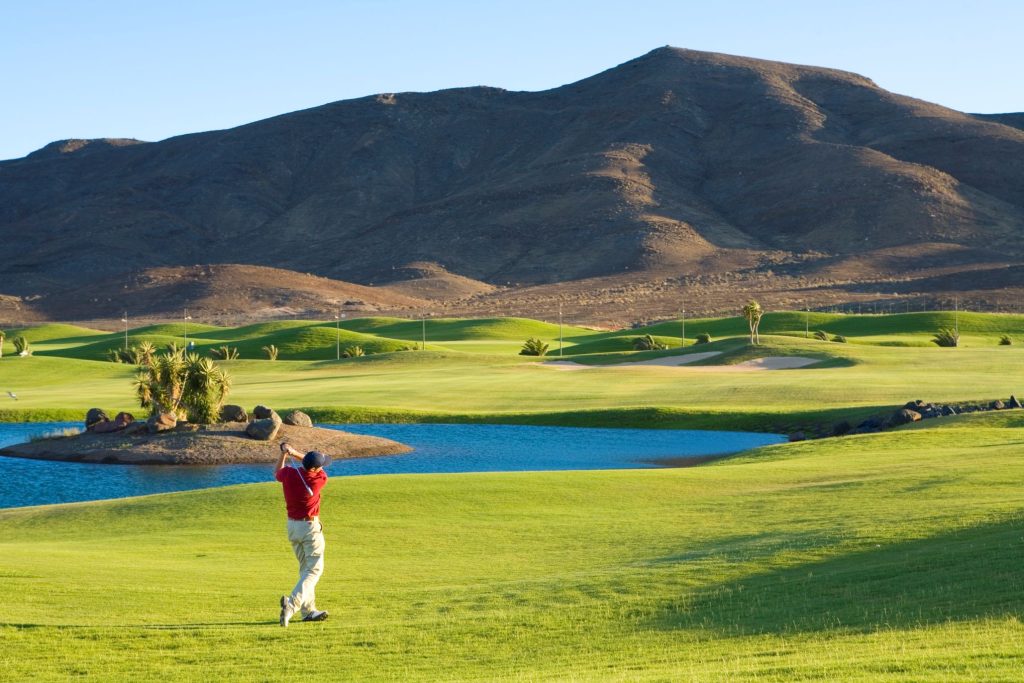
Image material: Trend Report Part II
In our image data base you will find this and other motifs available for download. Please refer to our terms of use.
Photo caption: At the Playitas Resort on Fuerteventura, everything revolves around sport and movement – whether it’s training against a stunning backdrop or playing on the nearby golf course of Golf Club Fuerteventura.
Media contact
Corporate Communications
t:+49 69 9588-8000
presse@dertour.com
Background:
DERTOUR Group has its head office in Cologne, Germany, and is REWE Group’s travel and tourism division. As one of Europe’s leading travel groups, DERTOUR Group encompasses approximately 200 companies and employs around 15,000 people worldwide. Every year, millions of guests travel with one of the Group’s tour operators or specialists. DERTOUR Group includes tour operators such as DERTOUR, ITS, Meiers Weltreisen, Kuoni, Helvetic Tours, ITS Coop Travel, Billa Reisen, Koning Aap, Apollo, Exim Tours and Fischer, as well as around 2,000 travel agencies (such as DERTOUR, DERPART, Kuoni, Exim, and Fischer, plus franchises and partners), the hotel brands Sentido, Aldiana, and ananea and the online travel agency Prijsvrij Vakanties. The DERTOUR Group also offers on-site support: The company runs an agency network with 71 offices in 31 travel destinations. The staff in the destination agencies assist the guests of the DERTOUR Group from their arrival at their holiday destination until their departure. For more information, go to www.dertour-group.com.